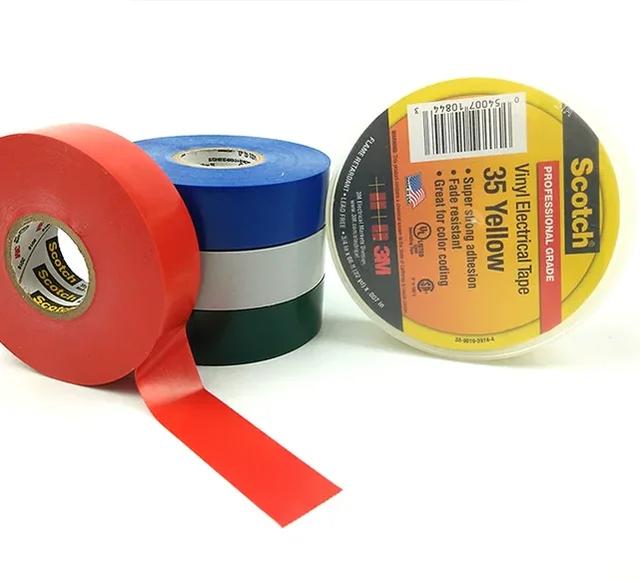
3M · 35Scotch Vinyl Color Coding Electrical Tape 35
Premium vinyl electrical tape for phase identification, color coding, cable jacket repair, marking, and insulation in demanding environments.
Both are 3M PVC vinyl electrical tapes quoted at the same 7 mil thickness, but they are built for different jobs: Scotch 35 carries fade-resistant colours for phase identification, while Super 33+ is the professional-grade tape for insulation and protective jacketing.
| Selection point | Scotch Vinyl Color Coding Electrical Tape 35 | Scotch Super 33+ Vinyl Electrical Tape |
|---|---|---|
| Product type | Color-coding vinyl electrical tape | Professional-grade vinyl electrical tape |
| Backing | PVC vinyl | PVC vinyl |
| Typical uses | Phase identification, Color coding and cable jacket repair | Wire and cable insulation, Protective jacketing |
| Source | Manufacturer data | Manufacturer data |
Both tapes use a PVC vinyl backing and are quoted at 0.178 mm (7 mil), so the thickness is not what separates them. Scotch 35 is the colour-coding tape: its fade-resistant colours are used for phase identification, marking and organisation, and the record lists UL 510, CSA, VDE, IEC and RoHS alignments. Super 33+ is the professional-grade insulation tape, UL Listed and CSA Certified, selected where temperature range, conformability and weather resistance matter.
Temperature is one documented difference. Tape 35 is listed from -10°C to 105°C, while Super 33+ is listed from -18°C to 105°C, so the professional-grade tape keeps a wider low-temperature window for cold-weather installation. Both are rated up to 600 V. For identification the colour does the work; for primary insulation and protective jacketing the grade and the temperature window do.
The two are not substitutes. Start from what the job asks for — an identification standard that calls for a specific colour, or an insulation and jacketing duty that calls for the professional grade — then confirm width, length, colour and roll quantity against the requirement before requesting a quotation.
Premium vinyl electrical tape for phase identification, color coding, cable jacket repair, marking, and insulation in demanding environments.

Professional-grade vinyl electrical tape for insulating and protecting wire and cable connections in demanding indoor and outdoor applications.