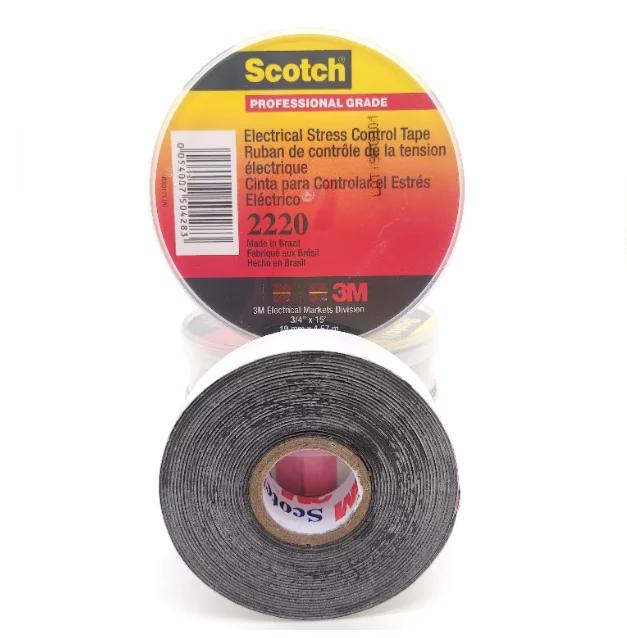
3M · 2220Scotch 2220 Electrical Stress Control Tape
Electrical stress-control tape used to manage voltage distribution around medium-voltage cable joints and terminations where shielding is removed.
Scotch 2220 controls electrical stress at the shield cut-back — it is not insulation. Scotch 130C is the linerless self-fusing EPR tape for insulation at 69 kV.
| Selection point | Scotch 2220 Electrical Stress Control Tape | Scotch Linerless Rubber Splicing Tape 130C |
|---|---|---|
| Product type | Electrical stress control tape | Linerless rubber splicing tape |
| Backing | Stress-control compound | Self-fusing ethylene propylene rubber |
| Typical uses | Medium-voltage cable joints, Cable terminations and stress control | Cable splicing and terminating, Bus bar insulation and jacket repair |
| Source | Manufacturer data | Manufacturer data |
These are two different layers of the same joint, not two versions of one tape. Scotch 2220 is a stress-control compound applied at the cable shield cut-back to manage the electric field where shielding is removed, for medium-voltage cable joints and terminations. Scotch 130C is the linerless self-fusing EPR tape that builds the primary insulation wall of the joint. One controls the field, the other insulates — a joint that needs both uses both, in their own layers.
Scotch 130C carries the insulation numbers: 0.76 mm (30 mil), documented by 3M for primary insulation of solid dielectric cables rated through 69 kV, rated for continuous service to 90°C with an emergency overload rating to 130°C. It is linerless, so it wraps straight onto the joint with no liner to strip away. Scotch 2220 carries no insulation rating of its own — do not size it as insulation, and do not expect it to replace the splicing tape in the build-up.
Do not confuse 130C with Scotch 23, the other EPR tape in the family. Tape 23 is supplied on a removable liner that is stripped off as the tape is applied; 130C is the linerless one. The liner changes handling, not the insulation family: both are self-fusing rubber tapes that bond to themselves into a continuous layer, and both are commonly finished with a suitable vinyl overwrap where added mechanical and environmental protection is required.
Match the layers to the joint design, not to the shelf. Start from the cable system, the voltage class, the joint or termination design and the applicable 3M installation procedure, then agree the build-up, the roll widths and the quantities for the complete joint before requesting a quotation.
Electrical stress-control tape used to manage voltage distribution around medium-voltage cable joints and terminations where shielding is removed.
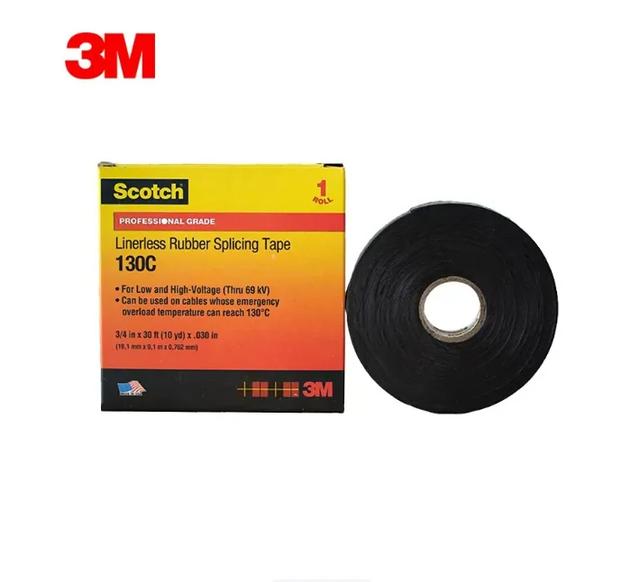
Premium linerless rubber splicing tape for primary insulation, moisture sealing, splicing, and terminating solid dielectric cables.