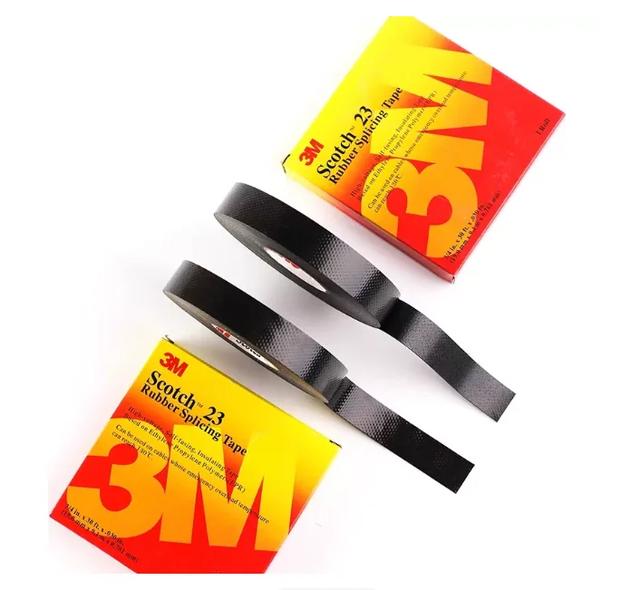
3M · 23Scotch Rubber Splicing Tape 23
Premium-grade self-fusing splicing tape for conformable cable-joint insulation, moisture protection, and splice build-up.
Compare two self-fusing rubber splicing tapes for cable insulation, sealing, splicing, and termination work.
| Selection point | Scotch Rubber Splicing Tape 23 | Scotch Linerless Rubber Splicing Tape 130C |
|---|---|---|
| Product type | Self-fusing rubber splicing tape | Linerless rubber splicing tape |
| Backing | Ethylene propylene rubber | Self-fusing ethylene propylene rubber |
| Typical uses | Cable-joint insulation, Moisture-sealed splice build-up | Cable splicing and terminating, Bus bar insulation and jacket repair |
| Source | Manufacturer data | Manufacturer data |
Both are self-fusing rubber splicing tapes that bond to themselves during application to build a continuous insulating layer, but they are not automatic substitutes. Tape 23 uses a conformable ethylene propylene rubber backing and is documented as ASTM approved and RoHS compliant; Scotch 130C is the linerless tape, quoted at 0.76 mm (30 mil) with an emergency overload temperature up to 130°C.
3M documents Scotch 130C for primary insulation of solid dielectric cables rated through 69 kV when it is used in the appropriate cable system, while Tape 23 is selected for self-fusing cable insulation, splice build-up and moisture sealing. Which one fits depends on the cable class, the joint or termination design and the applicable installation procedure — confirm all three before selection.
These are rubber splicing tapes rather than general-purpose PVC vinyl. Where added mechanical and environmental protection is required, a suitable vinyl overwrap is commonly used, but the complete splice build-up should follow the applicable 3M procedure rather than an assumed combination of tapes.
Premium-grade self-fusing splicing tape for conformable cable-joint insulation, moisture protection, and splice build-up.
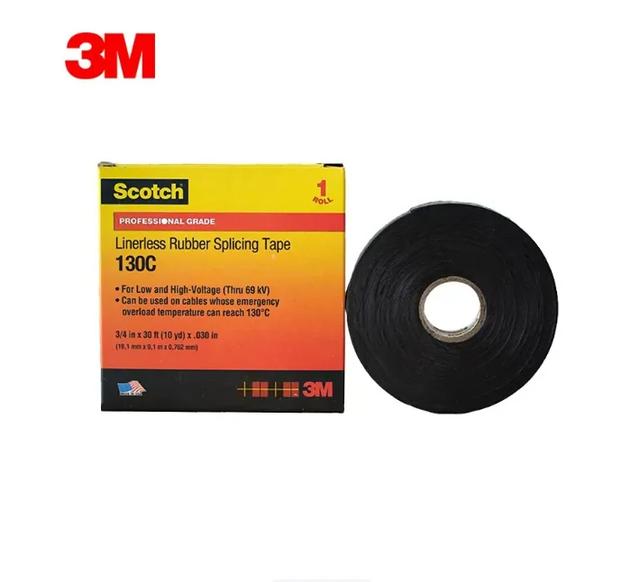
Premium linerless rubber splicing tape for primary insulation, moisture sealing, splicing, and terminating solid dielectric cables.