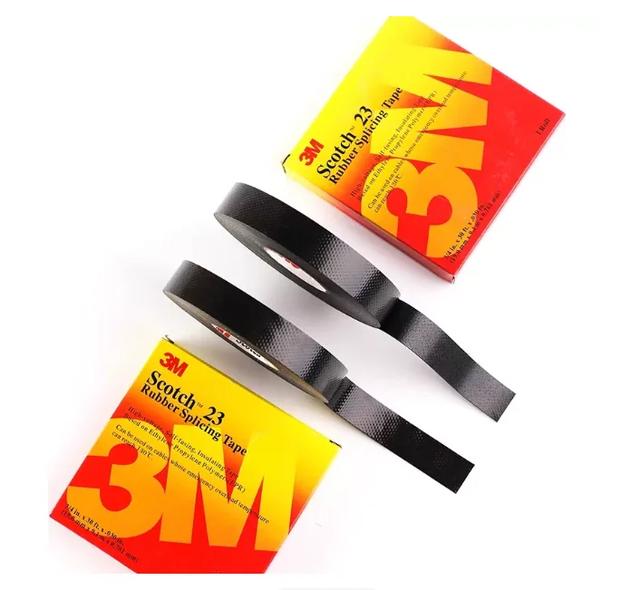
3M · 23Scotch Rubber Splicing Tape 23
Premium-grade self-fusing splicing tape for conformable cable-joint insulation, moisture protection, and splice build-up.
Scotch 23 is linered EPR for main insulation; 2220 is stress-control mastic for terminations. Compare build, use and voltage class, then pick the right one.
| Selection point | Scotch Rubber Splicing Tape 23 | Scotch 2220 Electrical Stress Control Tape |
|---|---|---|
| Product type | Self-fusing rubber splicing tape | Electrical stress control tape |
| Backing | Ethylene propylene rubber | Stress-control compound |
| Typical uses | Cable-joint insulation, Moisture-sealed splice build-up | Medium-voltage cable joints, Cable terminations and stress control |
| Source | Manufacturer data | Manufacturer data |
These are two different layers of the same joint, not two versions of one tape. Scotch 23 is a linered EPR rubber splicing tape that builds the primary insulation wall of a cable joint or termination, while Scotch 2220 is a stress-control mastic applied at the cable shield cut-back to manage the electric field where shielding is removed. One insulates, the other controls the field, and a joint that needs both uses both, in their own layers.
Scotch 23 carries the insulation numbers: 30 mil (0.76 mm) EPR tape, documented by 3M for primary insulation of solid dielectric cables rated through 69 kV, rated for continuous service to 90°C. It is supplied on a removable liner that is stripped off as the tape is applied, and it self-fuses into a continuous void-free insulation layer. Scotch 2220 carries no insulation rating of its own — do not size it as insulation, and do not expect it to replace the splicing tape in the build-up.
Build and handling follow the job each one does. Tape 23 is wrapped with half overlap and bonds to itself as it is stretched onto the joint, so the insulation wall is built up layer by layer to the thickness the design calls for. Tape 2220 is a mouldable compound pressed and shaped by hand around the shield cut-back, where it smooths the field concentration at the edge of the shielding before the insulation is built over it. Both are commonly finished with a suitable vinyl overwrap where added mechanical and environmental protection is required.
Match the layers to the joint design, not to the shelf. Start from the cable system, the voltage class, the joint or termination design and the applicable 3M installation procedure, then agree the build-up, the roll widths and the quantities for the complete joint before requesting a quotation.
Premium-grade self-fusing splicing tape for conformable cable-joint insulation, moisture protection, and splice build-up.
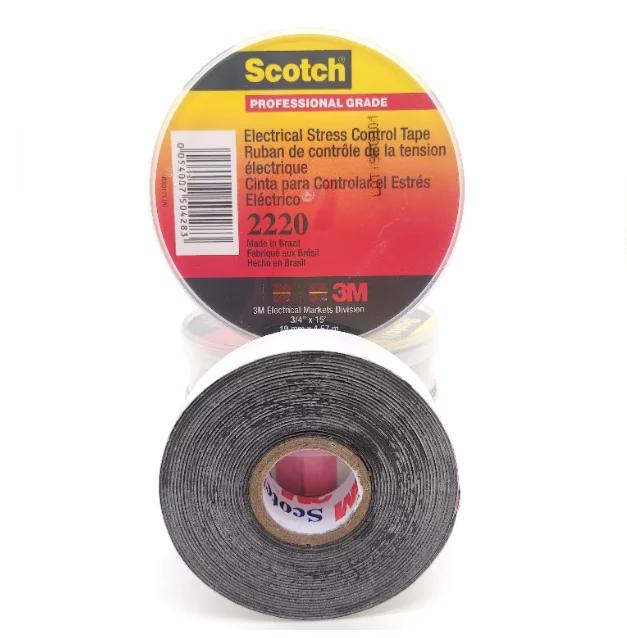
Electrical stress-control tape used to manage voltage distribution around medium-voltage cable joints and terminations where shielding is removed.