
Stock photograph: Scotch 27 glass-cloth roll with retail box.3M · 273M Glass Cloth Electrical Tape 27
Woven glass-cloth electrical tape for heat-stable insulation where mechanical strength, edge-tear resistance, and abrasion resistance matter.
Both are 3M electrical tapes, but Scotch 27 is a 0.178 mm woven glass-cloth tape for heat-stable insulation at Class B 130°C (UL recognition to 150°C) in 600-volt dry applications, while Scotch 23 is a 30 mil (0.76 mm) self-fusing EPR rubber tape for primary insulation of cable splices and terminations through 69 kV at 90°C continuous.
| Selection point | 3M Glass Cloth Electrical Tape 27 | Scotch Rubber Splicing Tape 23 |
|---|---|---|
| Product type | Glass-cloth electrical tape | Self-fusing rubber splicing tape |
| Backing | Woven glass cloth | Ethylene propylene rubber |
| Typical uses | Heat-stable insulation for furnace and oven controls, Motor leads and switches, Splices on heat-resistant wire | Cable-joint insulation, Moisture-sealed splice build-up |
| Source | Manufacturer data | Manufacturer data |
The two tapes are built from different materials for different jobs. Scotch 27 is a woven glass-cloth tape with a thermosetting rubber adhesive, quoted at 0.178 mm (7 mil) for heat-stable insulation at Class B 130°C, with UL recognition to 150°C, for 600-volt dry applications; the stocked roll is 19 mm × 20.1 m. Scotch 23 is a self-fusing ethylene propylene rubber tape quoted at 30 mil (0.76 mm), rated for continuous service to 90°C and used for primary insulation of cable splices and terminations through 69 kV.
Applications do not overlap much. Tape 27 insulates furnace and oven controls, motor leads, switches and splices on heat-resistant wire — assemblies where mechanical strength, edge-tear resistance and abrasion resistance matter. Tape 23 builds the insulating wall of a cable joint: stretched wraps fuse into a continuous layer for splice build-up and moisture sealing.
Handling differs too. Tape 23 is supplied on a removable liner that is stripped off as the tape is applied; Scotch 130C is the linerless tape in the same EPR family, so do not confuse the two — 23 carries a liner, 130C does not. Tape 27 is applied as a conventional adhesive tape, while 23 must be stretched and wrapped so the layers fuse into one continuous insulation.
Neither tape is a substitute for the other. Start from the service temperature and the work itself — a hot control or motor lead, or a cable joint or termination — then confirm the cable system, the joint or termination design and the applicable 3M installation procedure before requesting a quotation.
Woven glass-cloth electrical tape for heat-stable insulation where mechanical strength, edge-tear resistance, and abrasion resistance matter.
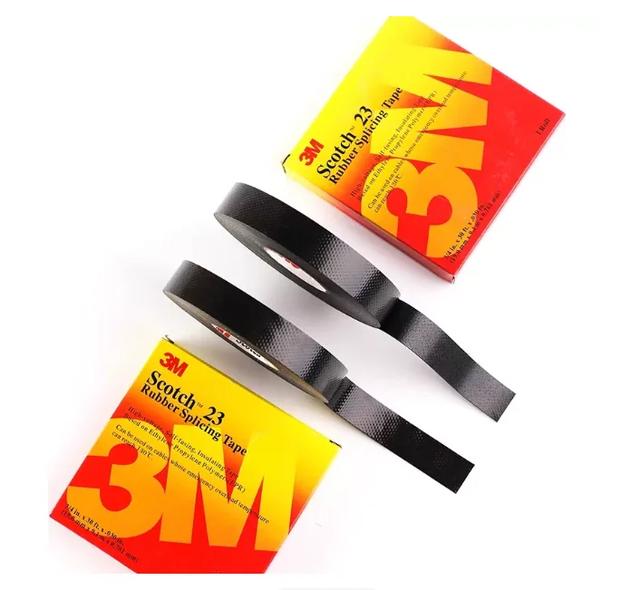
Premium-grade self-fusing splicing tape for conformable cable-joint insulation, moisture protection, and splice build-up.