Where this tape is used
- High-temperature cable joints and terminations
- Splice overwrap on spacer cable at 15 kV and above
- Primary insulation on silicone rubber cables
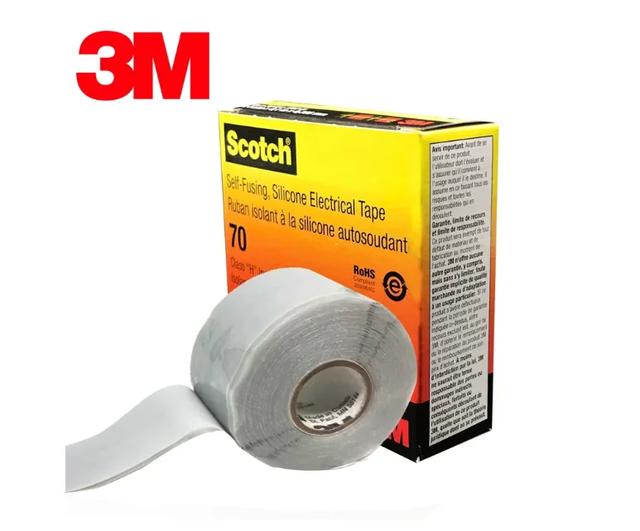
Self-fusing silicone rubber splicing tape for high-temperature cable joints and terminations where Class H (180°C) insulation is required.
| Backing | Silicone rubber |
|---|---|
| Adhesive | Self-fusing — no separate adhesive layer |
| Temperature rating | Class H — 180°C continuous |
| Thickness | 0.30 mm (12 mil) |
| Dielectric strength | 34 kV/mm |
| Standard roll size | 25 mm × 9.1 m |
Typical properties are not purchasing specifications. Confirm the substrate or cable system, operating conditions, required size, applicable standard, and installation procedure against the manufacturer documentation.
Manufacturer technical dataScotch Silicone Rubber Splicing Tape 70 is supplied to order in the format that matches the application. Confirm the model, required width and length, quantity, and destination, and our team will confirm availability, lead time, and quotation details for the specific item.
Typical properties published here are reference values from the manufacturer's documentation and are not purchasing specifications. Confirm the complete application, substrate or cable system, operating conditions, and applicable standard against the technical data sheet for the specific batch and format.
Select 70 where the joint or termination runs hot: 3M documents it as a Class H material for continuous operation at 180°C, for primary insulation on silicone rubber cables and as a splice overwrap on spacer cable operating at 15 kV and above. Standard rubber splicing tapes such as 23 and 130C are rated for lower continuous temperatures.
No. It is a self-fusing silicone rubber tape: stretched wraps fuse to themselves into a continuous layer rather than bonding with an adhesive, so the wrap tension and layer build matter as much as the model.
Send the cable voltage class, the joint or termination being built, the required width and roll length, and the service temperature so the correct self-fusing construction can be confirmed.