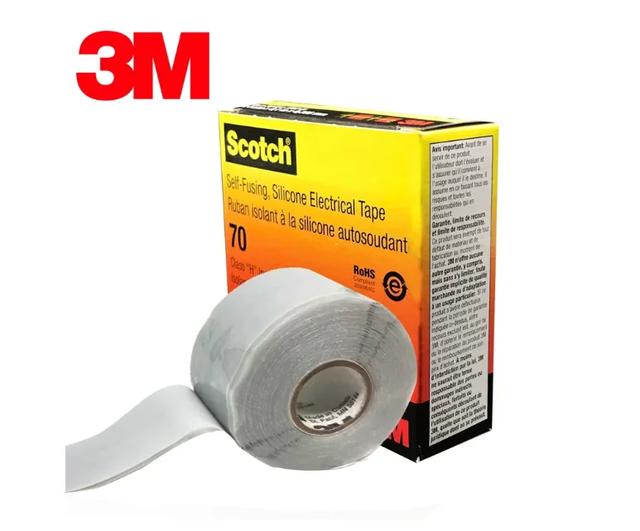
3M · 70Scotch Silicone Rubber Splicing Tape 70
Self-fusing silicone rubber splicing tape for high-temperature cable joints and terminations where Class H (180°C) insulation is required.
Scotch 70 is a self-fusing silicone splicing tape rated Class H 180°C at 0.30mm, while Scotch 130C is a linerless self-fusing EPR tape at 0.76mm rated 69kV.
| Selection point | Scotch Silicone Rubber Splicing Tape 70 | Scotch Linerless Rubber Splicing Tape 130C |
|---|---|---|
| Product type | Self-fusing silicone rubber splicing tape | Linerless rubber splicing tape |
| Backing | Silicone rubber | Self-fusing ethylene propylene rubber |
| Typical uses | High-temperature cable joints and terminations, Splice overwrap on spacer cable at 15 kV and above, Primary insulation on silicone rubber cables | Cable splicing and terminating, Bus bar insulation and jacket repair |
| Source | Manufacturer data | Manufacturer data |
Silicone against rubber is the real choice here, and the two tapes answer it in opposite ways. Scotch 70 is a self-fusing silicone tape built for heat, rated Class H 180°C, while Scotch 130C is a linerless self-fusing EPR tape built for primary insulation at 69kV. Choosing the wrong one leaves a joint with the wrong kind of protection, so the material matters more than the roll size.
Scotch 70 is the heat specialist of the pair. It is a self-fusing silicone rubber tape at 0.30mm with a dielectric strength of 34kV/mm, supplied as a 25mm by 9.1m roll, and it has no separate adhesive layer because the silicone fuses to itself as it is wrapped. That self-fusing build is what lets it hold together where heat would soften an ordinary adhesive.
Scotch 130C is the high-voltage specialist, and its trick is what it leaves out. It is a linerless self-fusing EPR tape at 0.76mm, which is 30mil, rated 69kV for primary insulation, so it wraps straight onto the joint with no liner to peel away and throw off the rhythm of the work. Do not confuse it with Scotch 23, the lined EPR tape that does carry a tearable liner; 130C is the one you wrap without stopping to strip anything.
Match the tape to the joint, not to the shelf. Reach for Scotch 70 when the joint must live with sustained high heat, and reach for Scotch 130C when the joint needs primary insulation at 69kV in a single EPR layer. If the job needs both extreme heat and high-voltage insulation, check the ratings of each tape against the actual service conditions before wrapping, and do not assume one tape can cover the other job.
Self-fusing silicone rubber splicing tape for high-temperature cable joints and terminations where Class H (180°C) insulation is required.
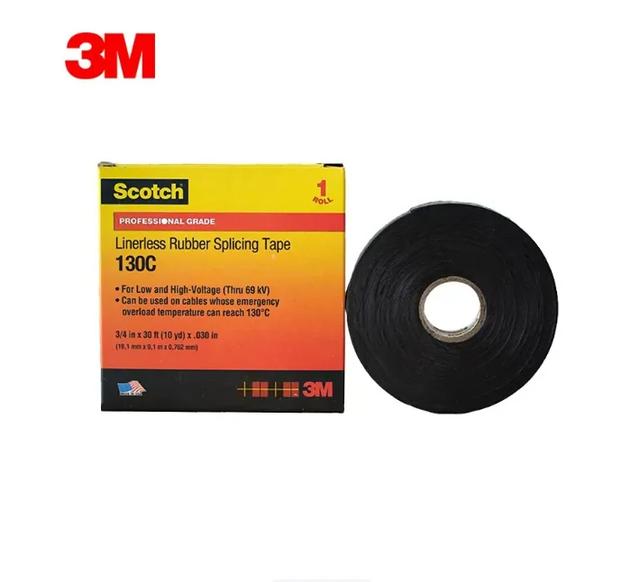
Premium linerless rubber splicing tape for primary insulation, moisture sealing, splicing, and terminating solid dielectric cables.